The Documented Record
The Problem
Everything below is a photograph taken in the house, a written estimate from a licensed Hawaii contractor, or a Hawaii statute. Nothing here is opinion.
If you have four minutes
Terminix owed a repair. Its contractor put red oak where white oak was, cut it short of the walls, skipped the sanding, and finished it anyway. He admits the short cut in writing. A licensed contractor says $24,802.61 puts it right. Terminix has offered $15,000. The family would rather have the floor.
What She Paid For
Miss Lee, 77, has held a Terminix Drywood Termite Defend plan with a damage repair guarantee on her home in Waialae Iki, Honolulu, since September 2020, when she also paid Terminix roughly $10,000 to fumigate the house. The promise is simple: if termites damage the house, Terminix arranges and pays for a contractor to repair it. A repair puts back what was there. She paid every year.
In 2026, termites damaged the hardwood floors in her great room, which is the living and dining room together, and in her office. Terminix accepted the claim, wrote a scope of work, and sent a licensed contractor of its choosing, Makainai Construction LLC. The work ran from August 5 to August 19, 2026.
This was the first time she asked Terminix to keep its end of the deal.
What Was Installed
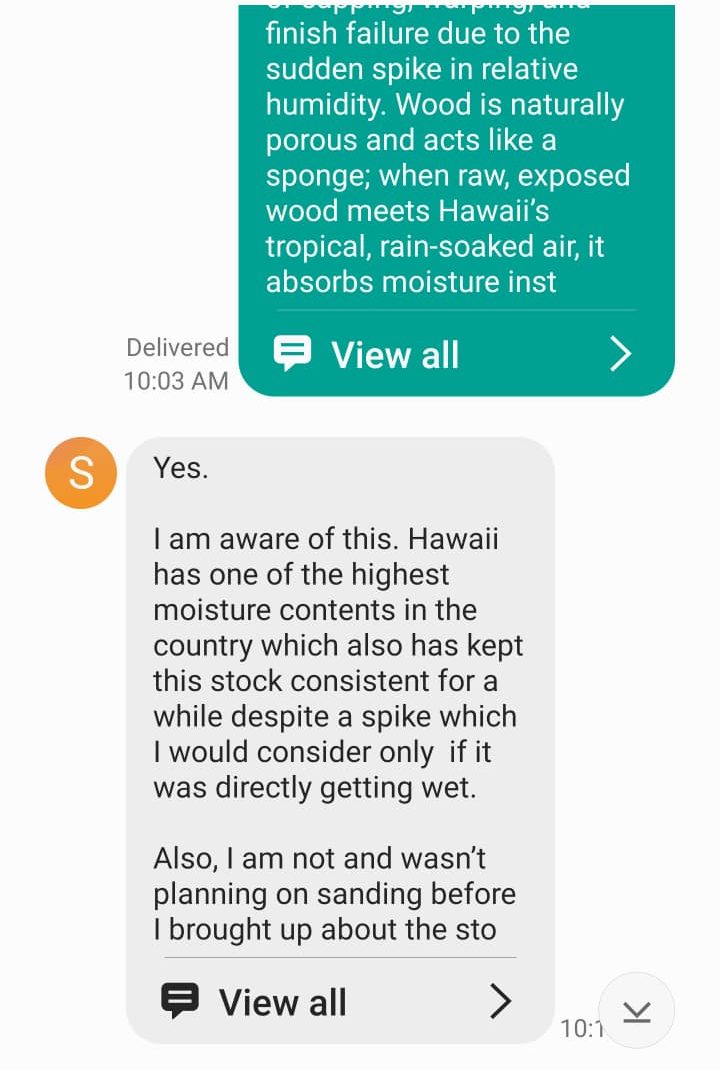
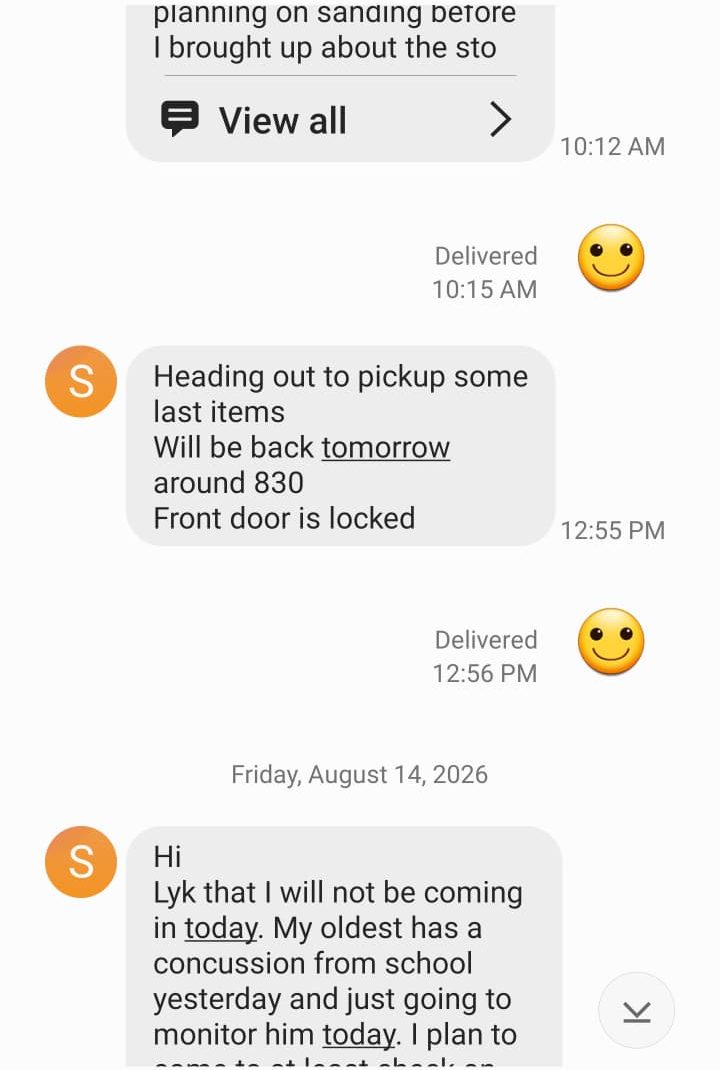
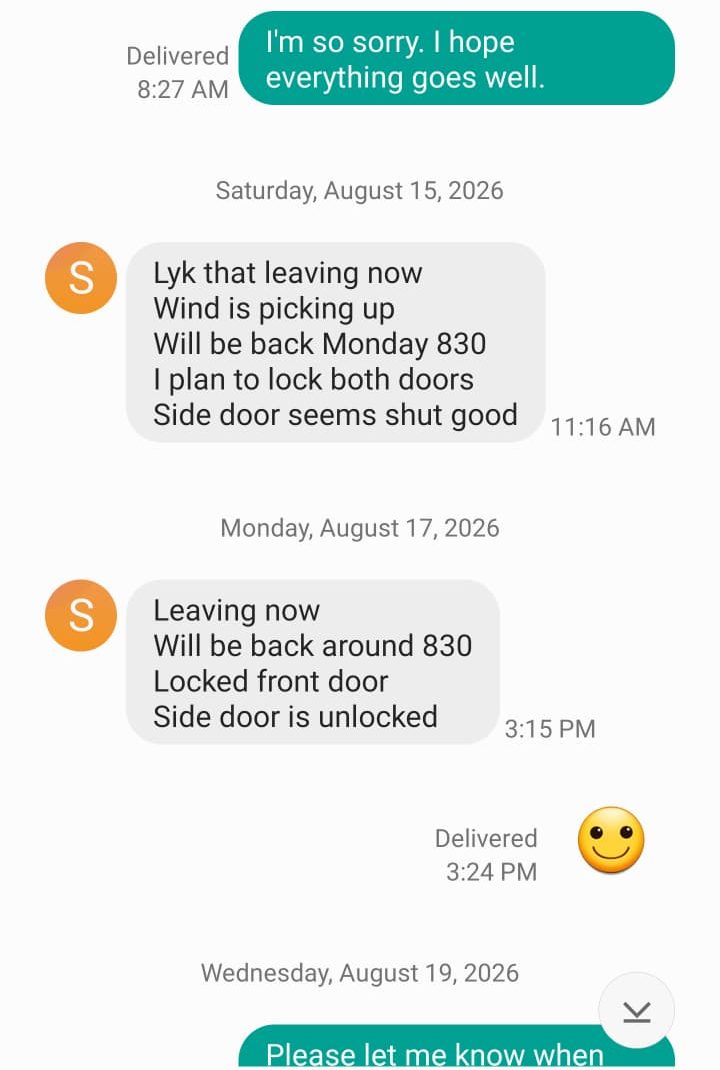
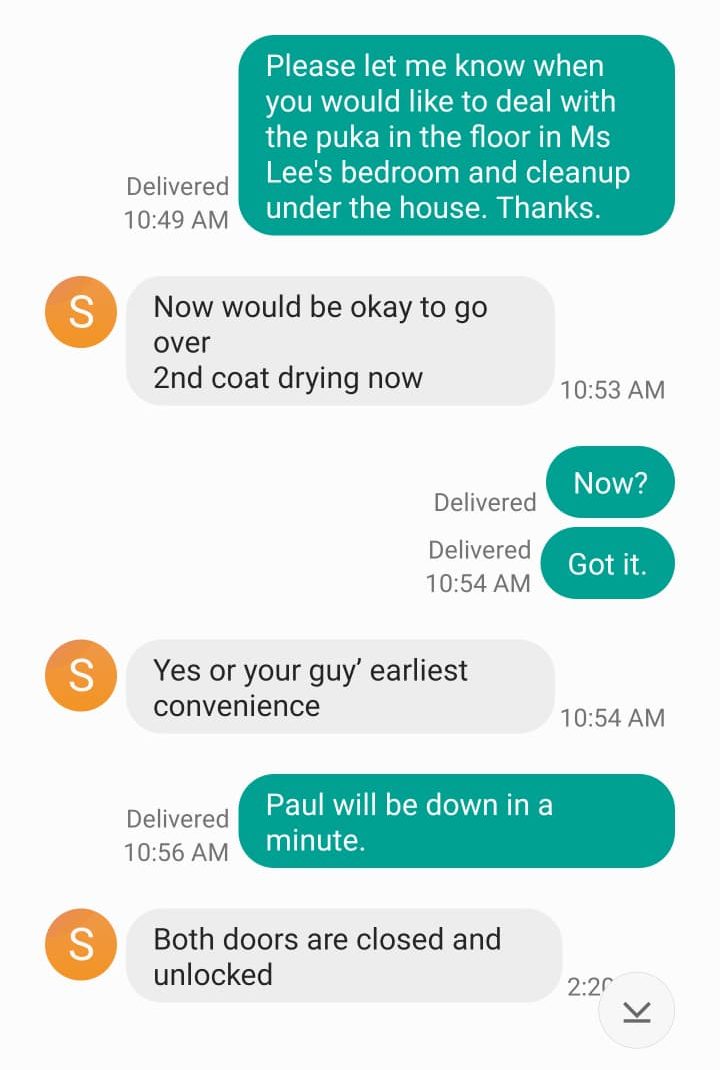
The Contractor, In His Own Words
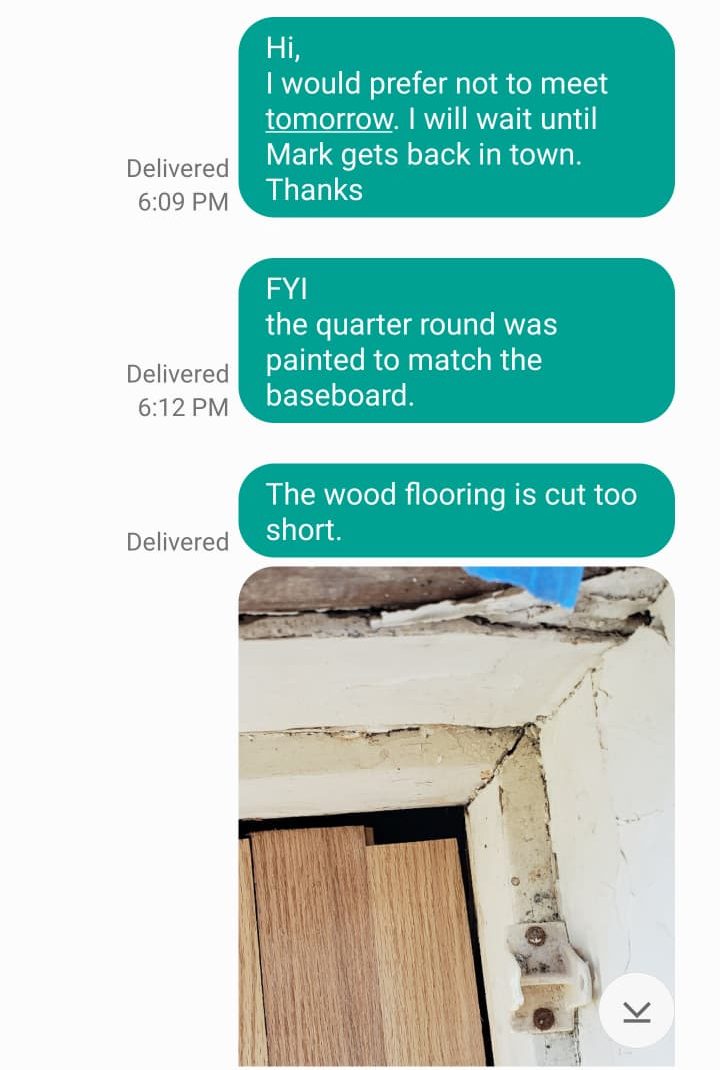
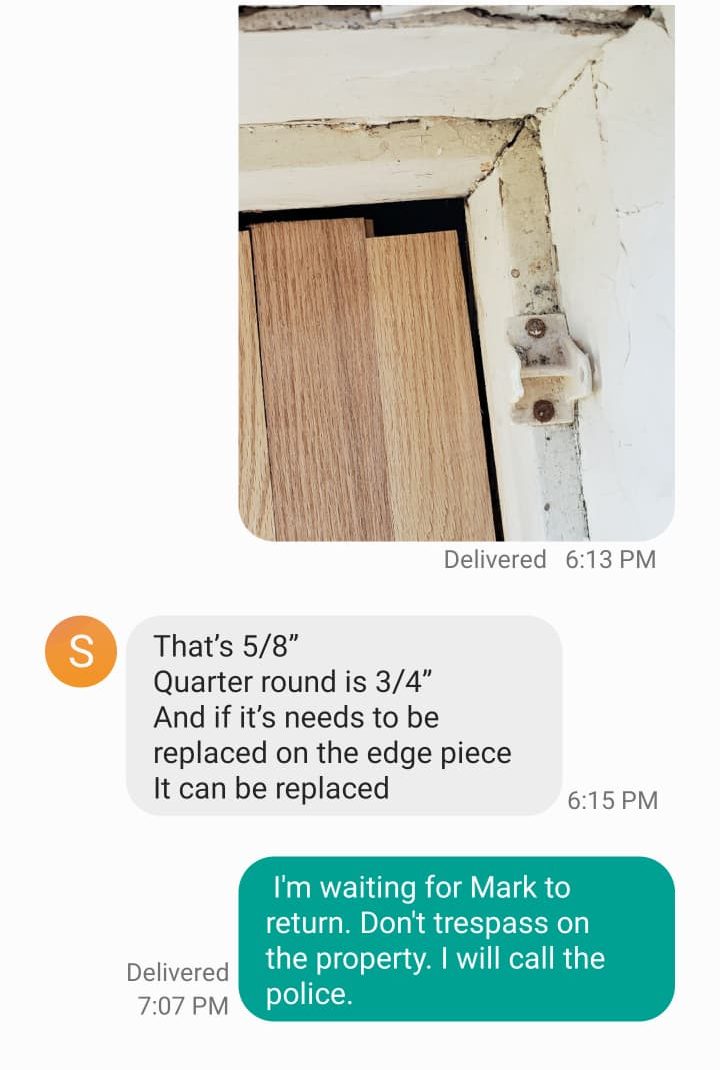
Text messages between the family and the contractor Terminix chose, August 13 to 20, 2026. His phone number is cropped out. Nothing else is.
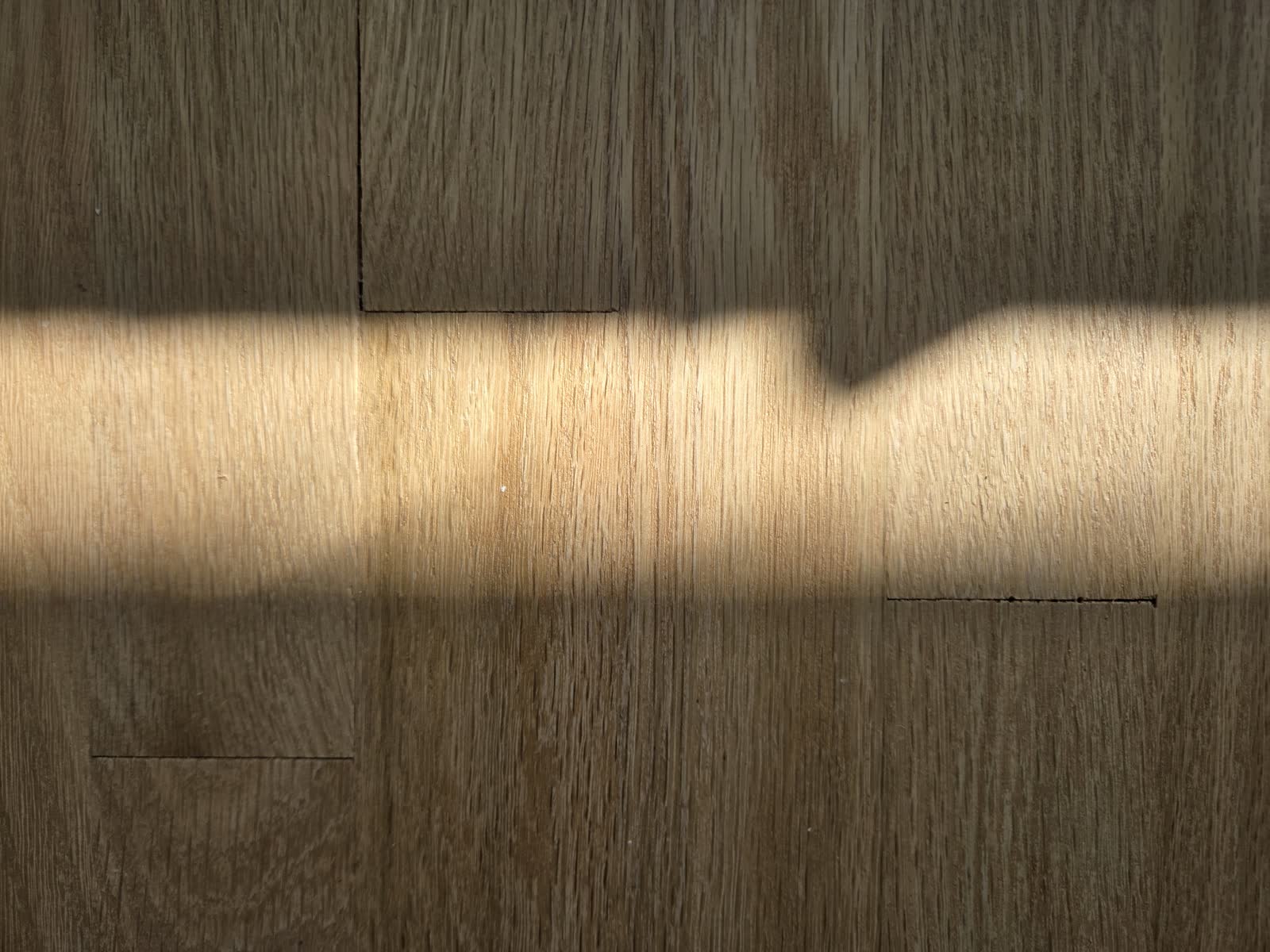
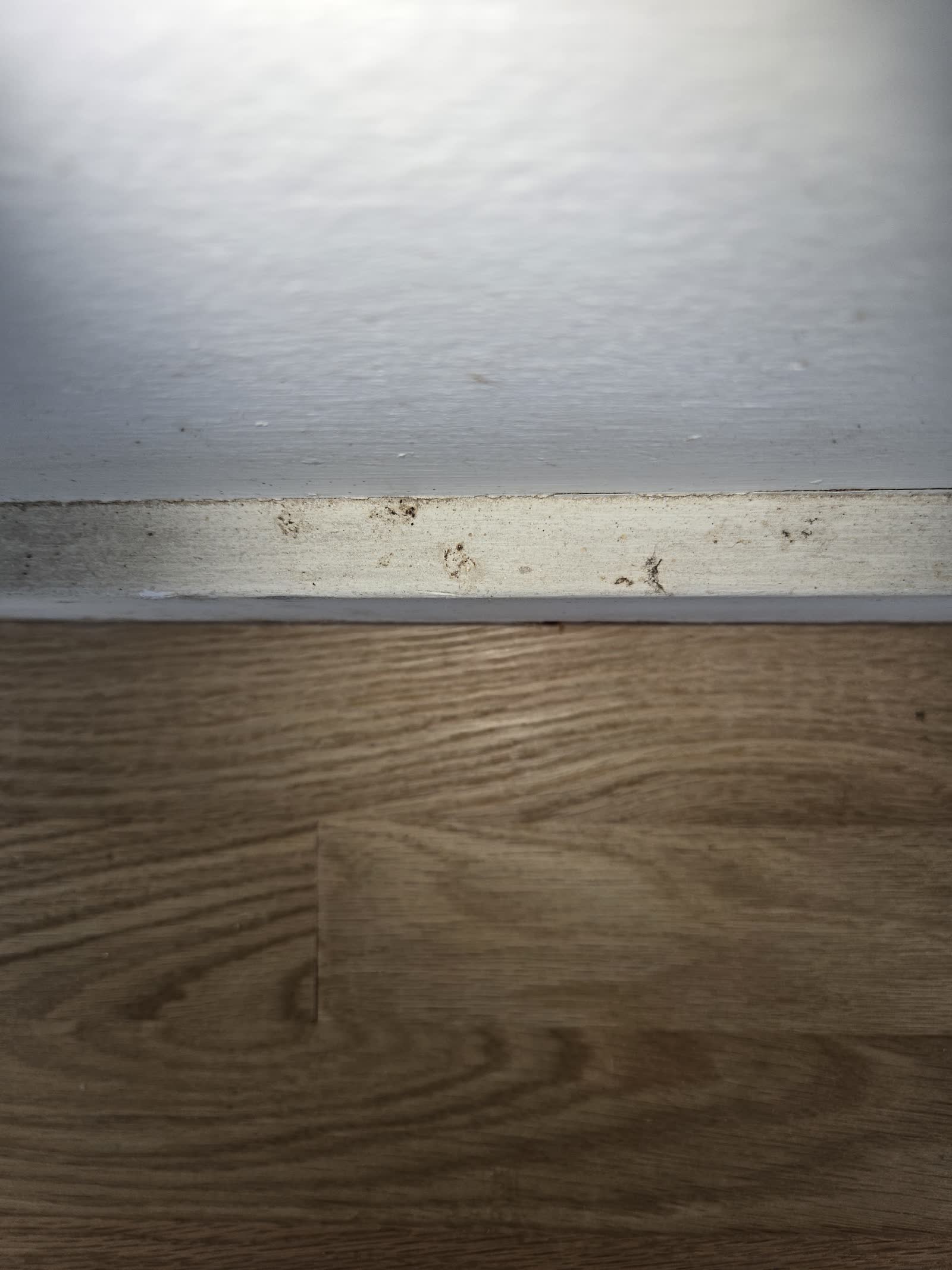
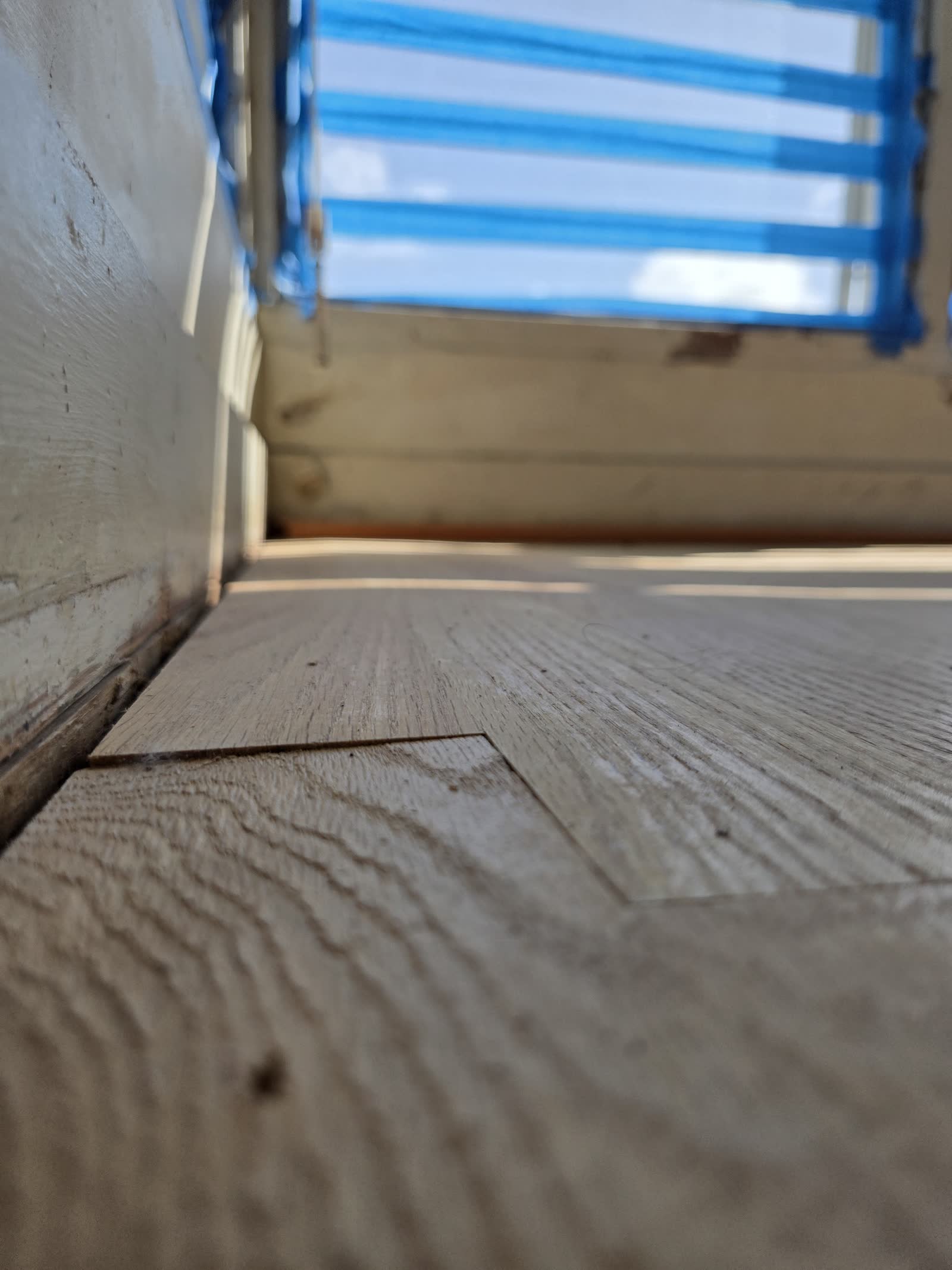
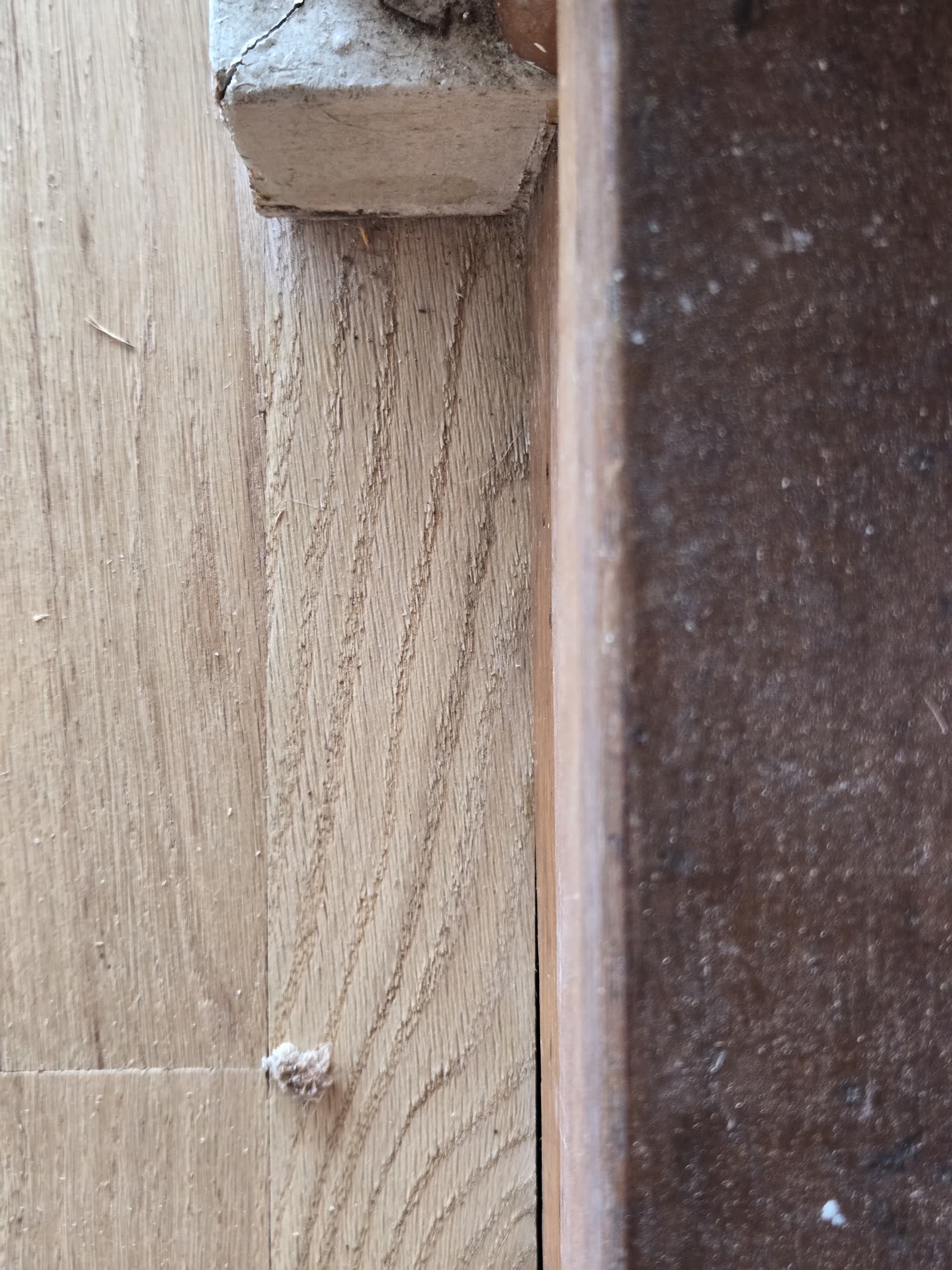
The Photographs
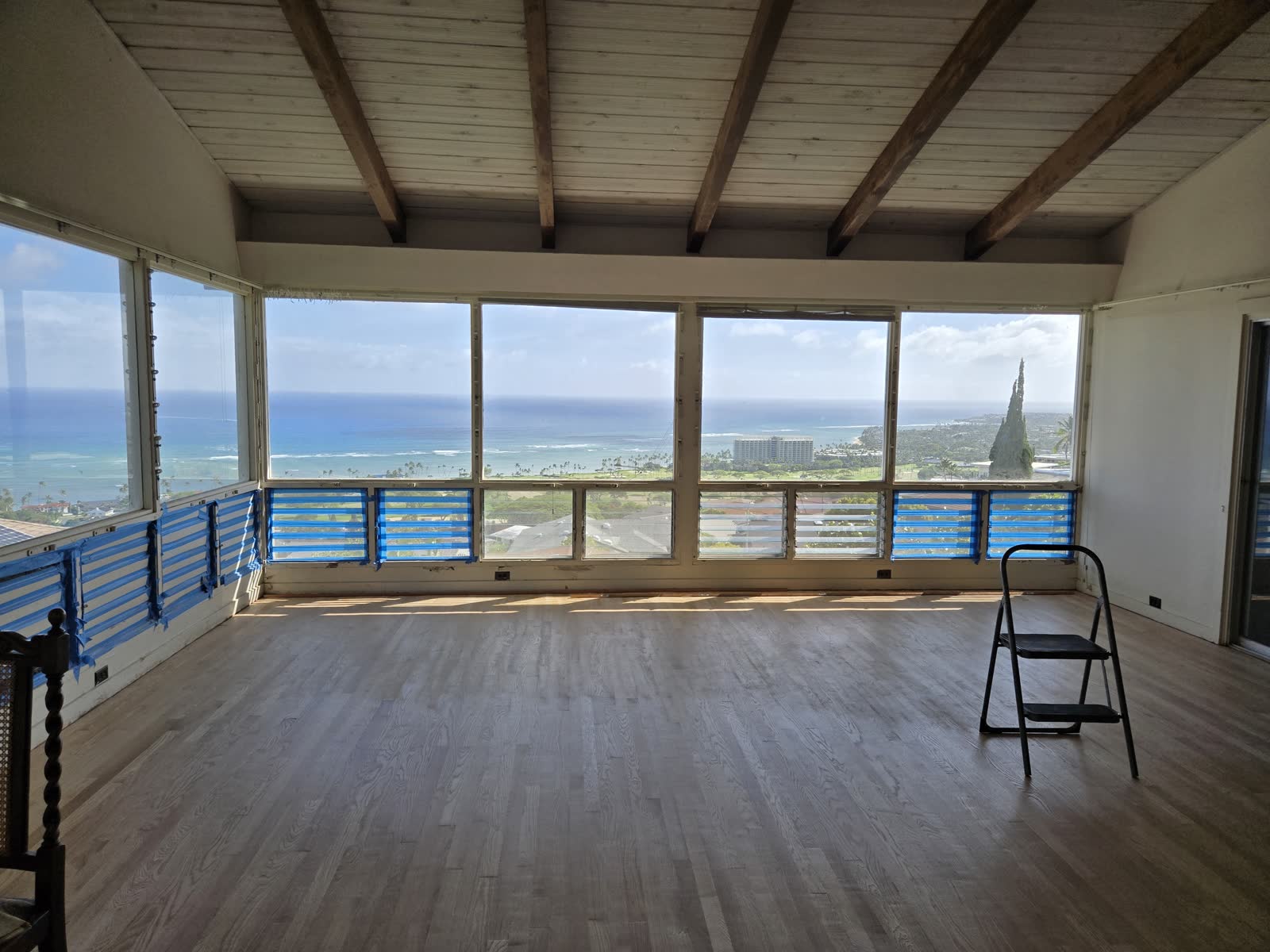
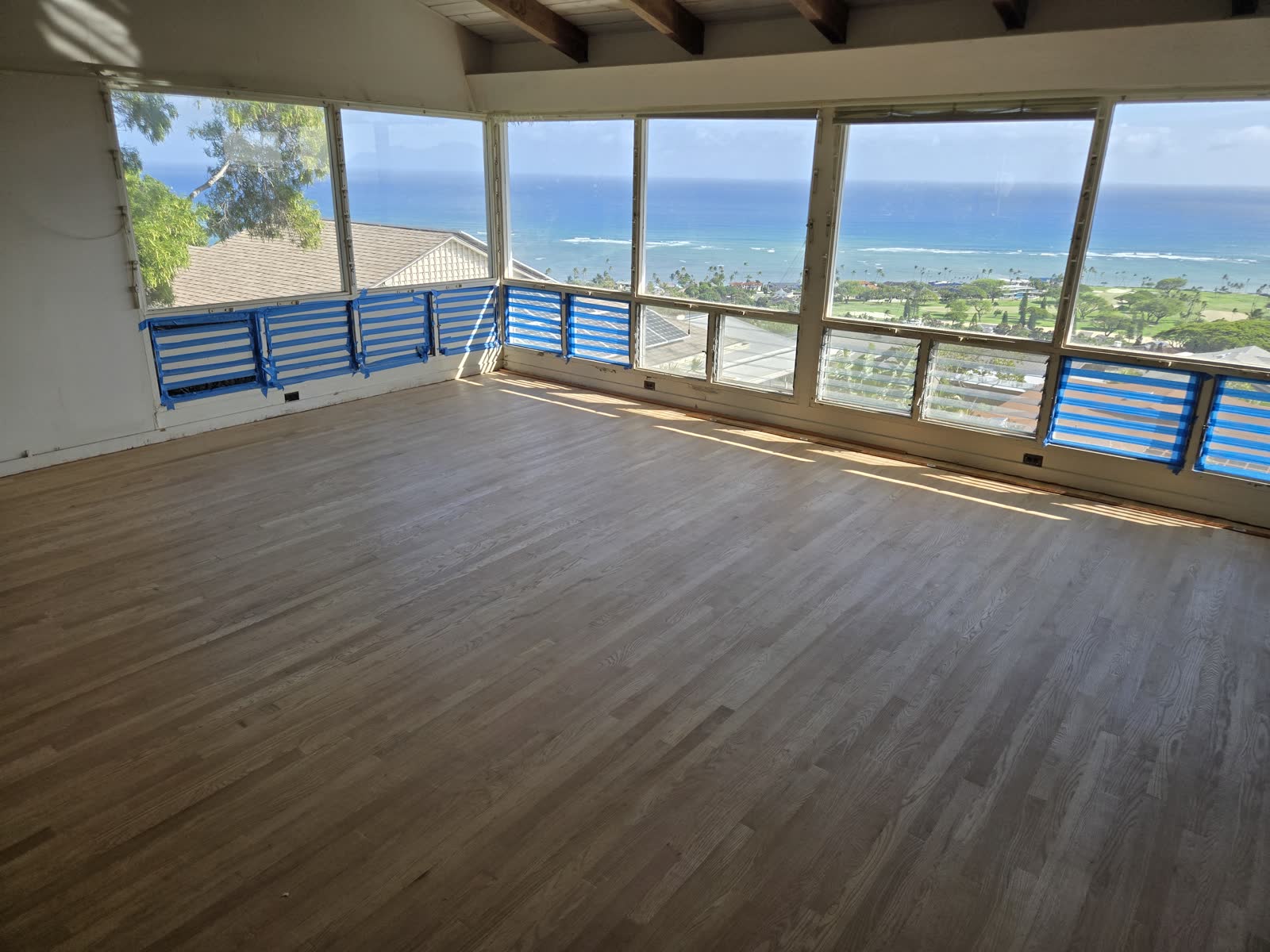
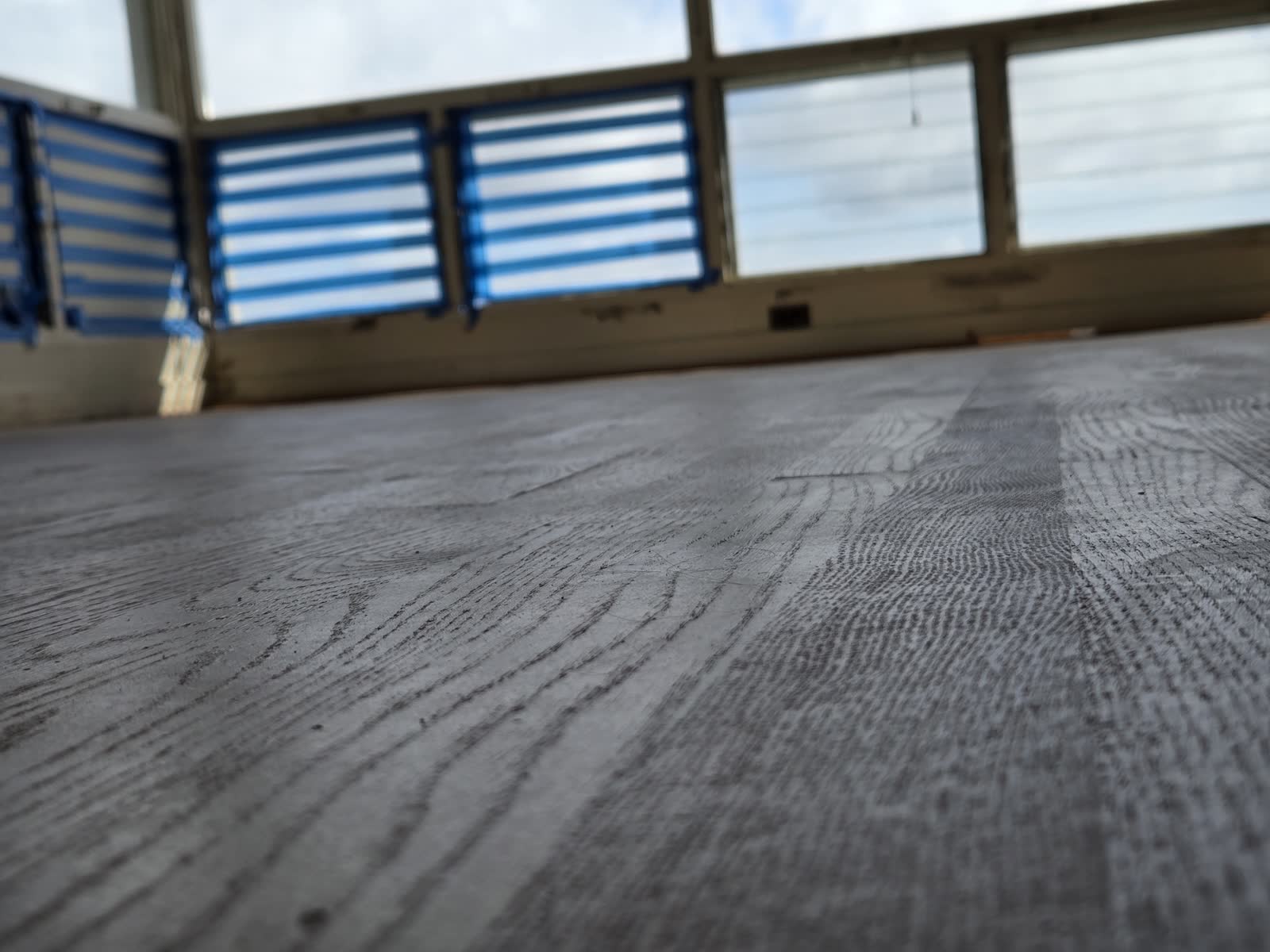
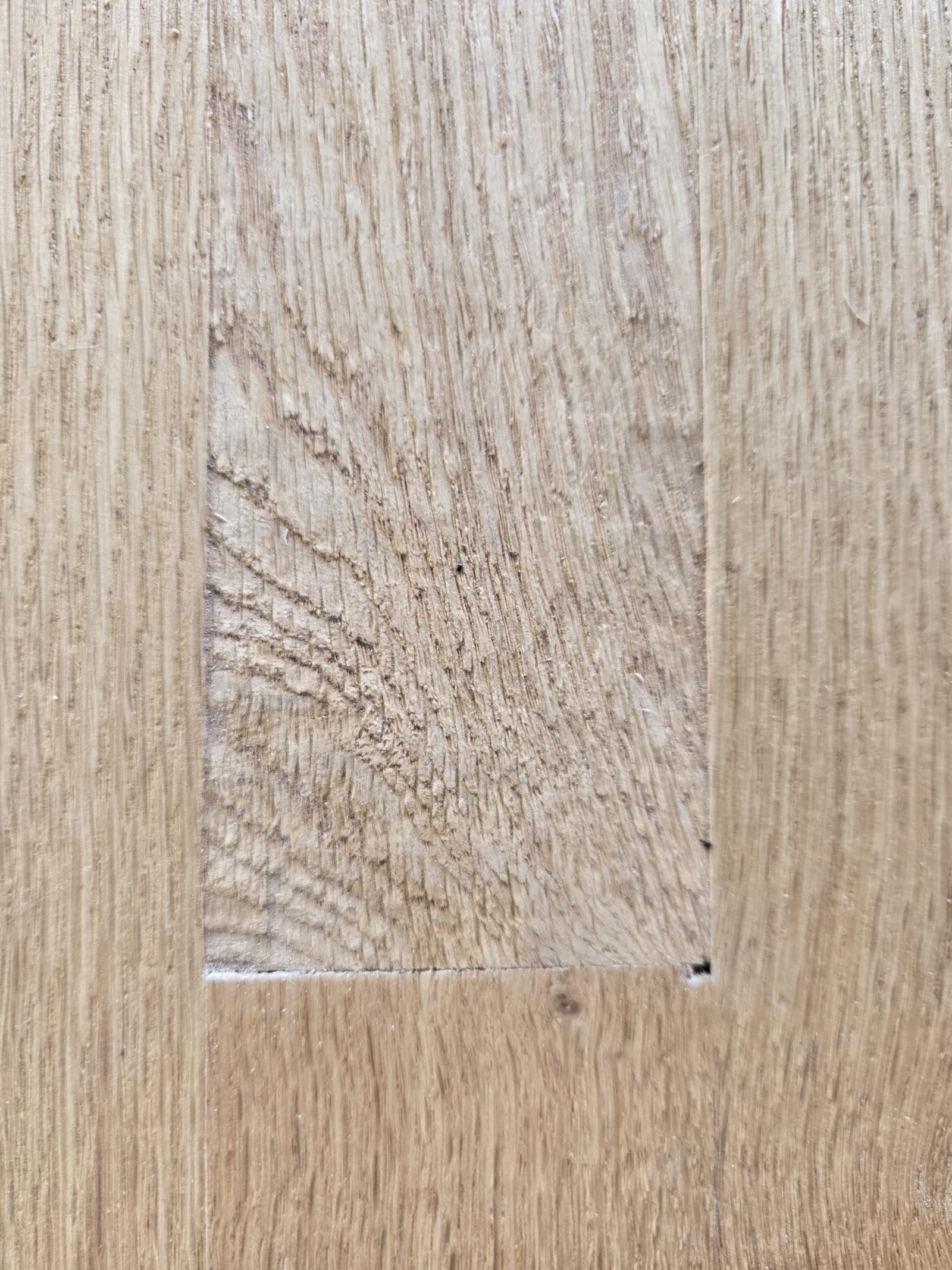
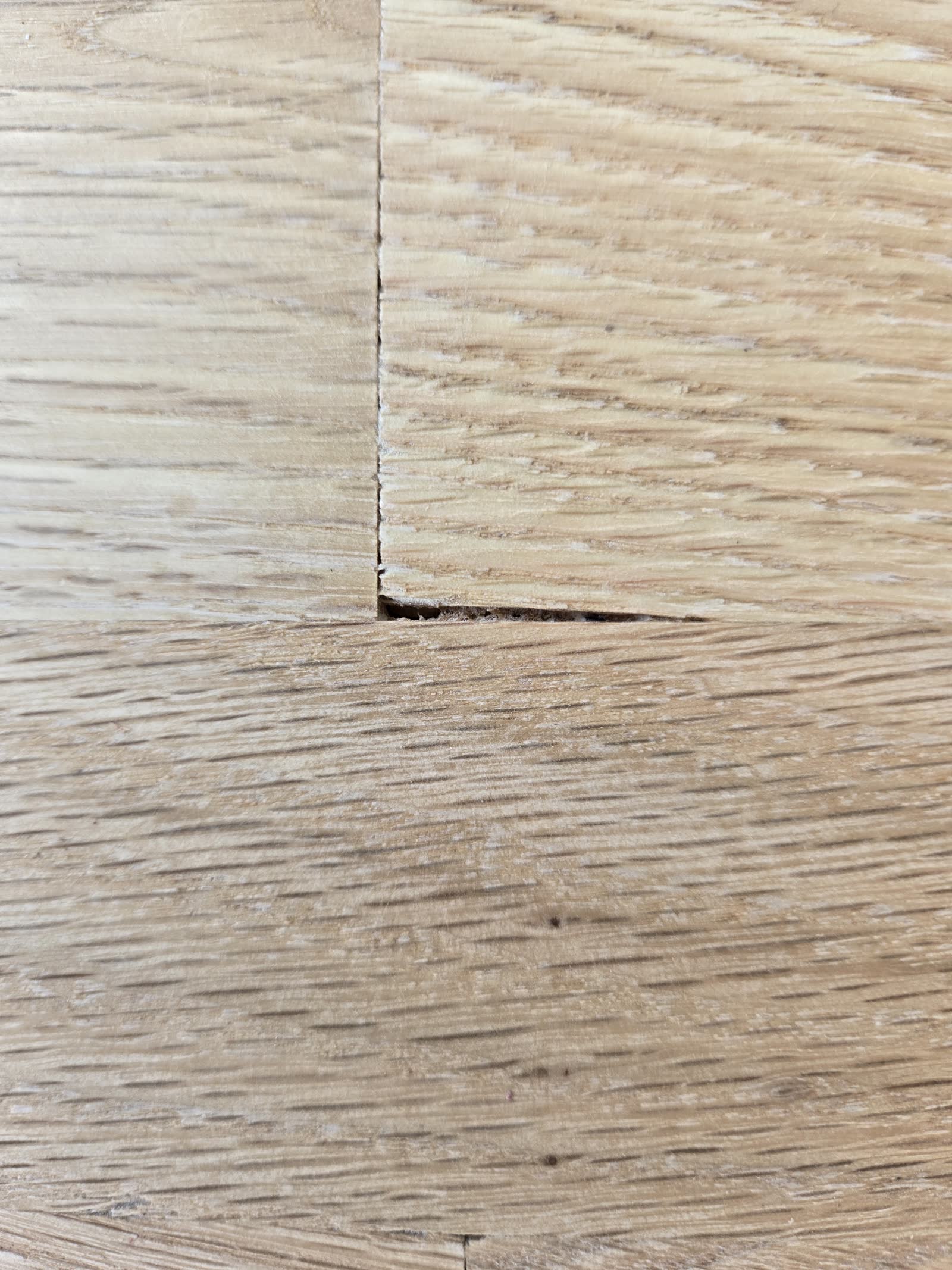
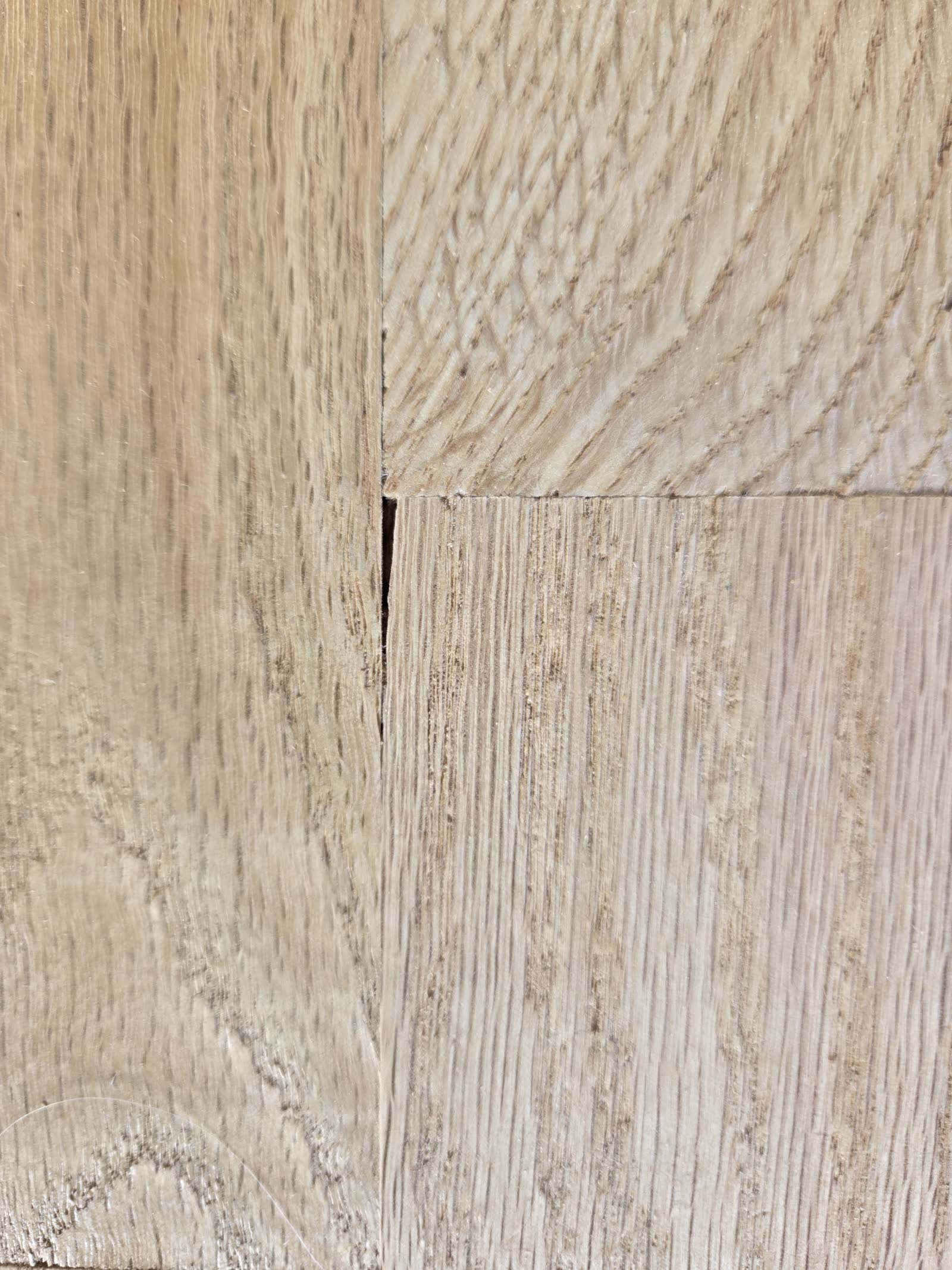
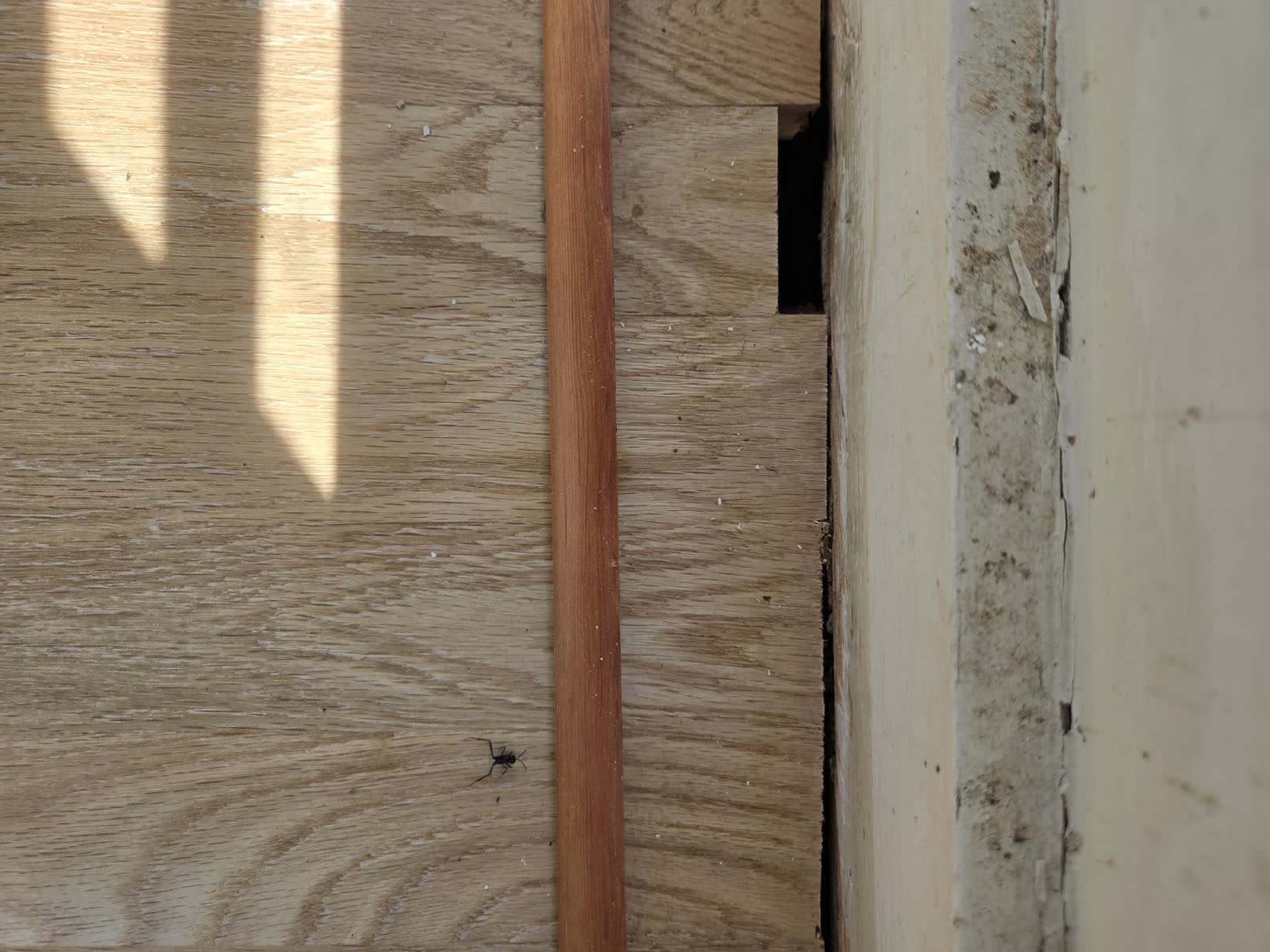
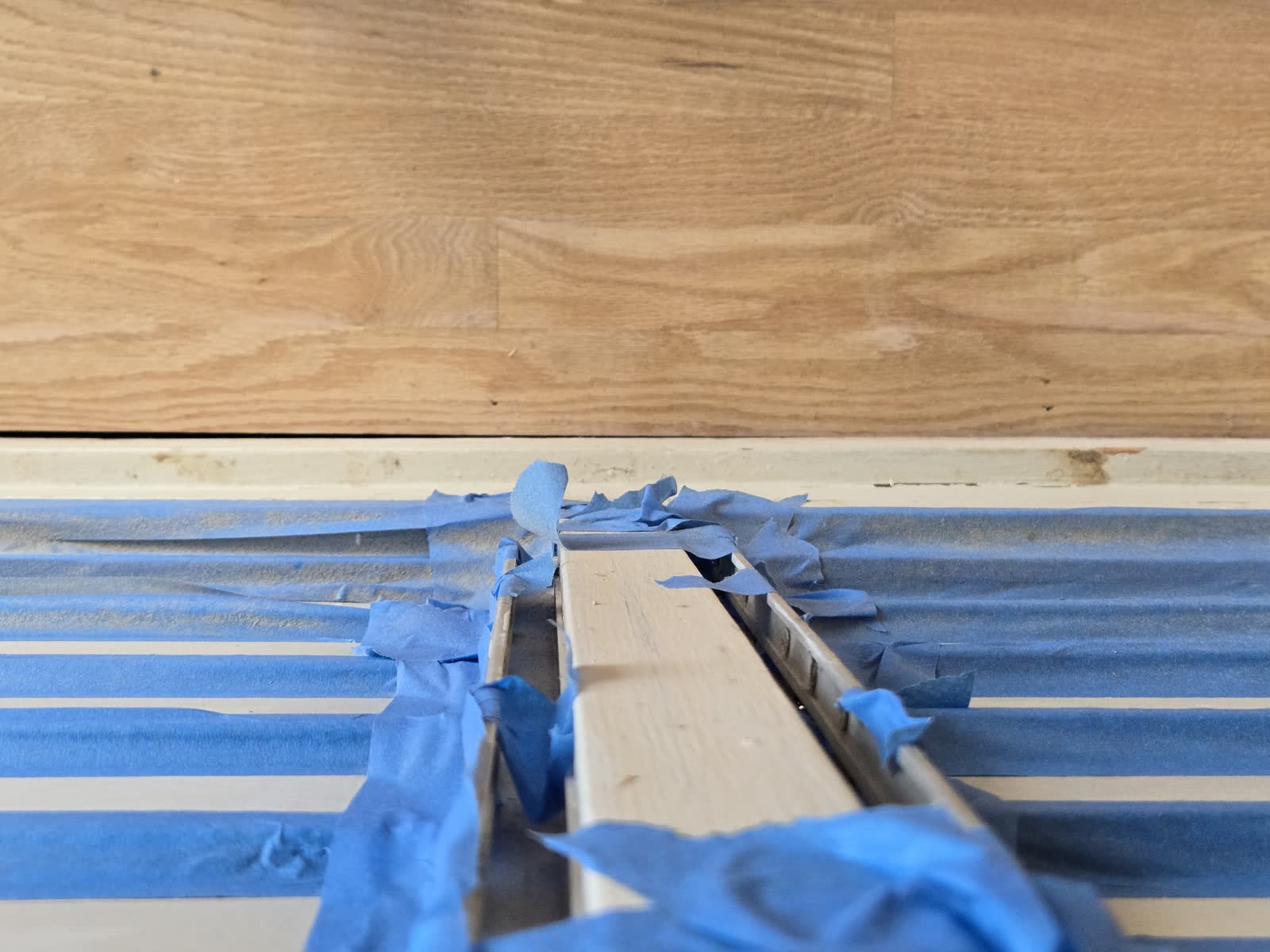
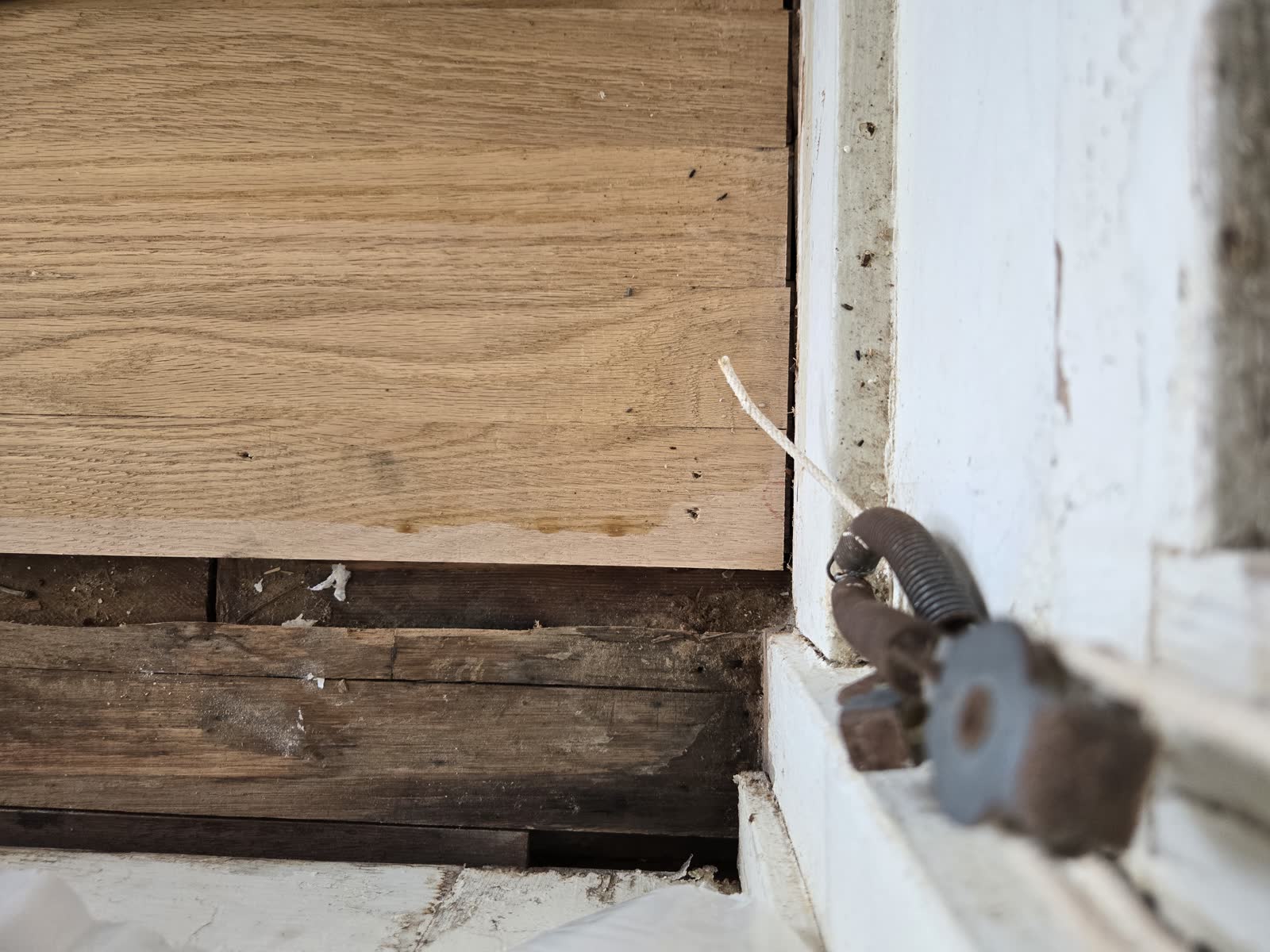
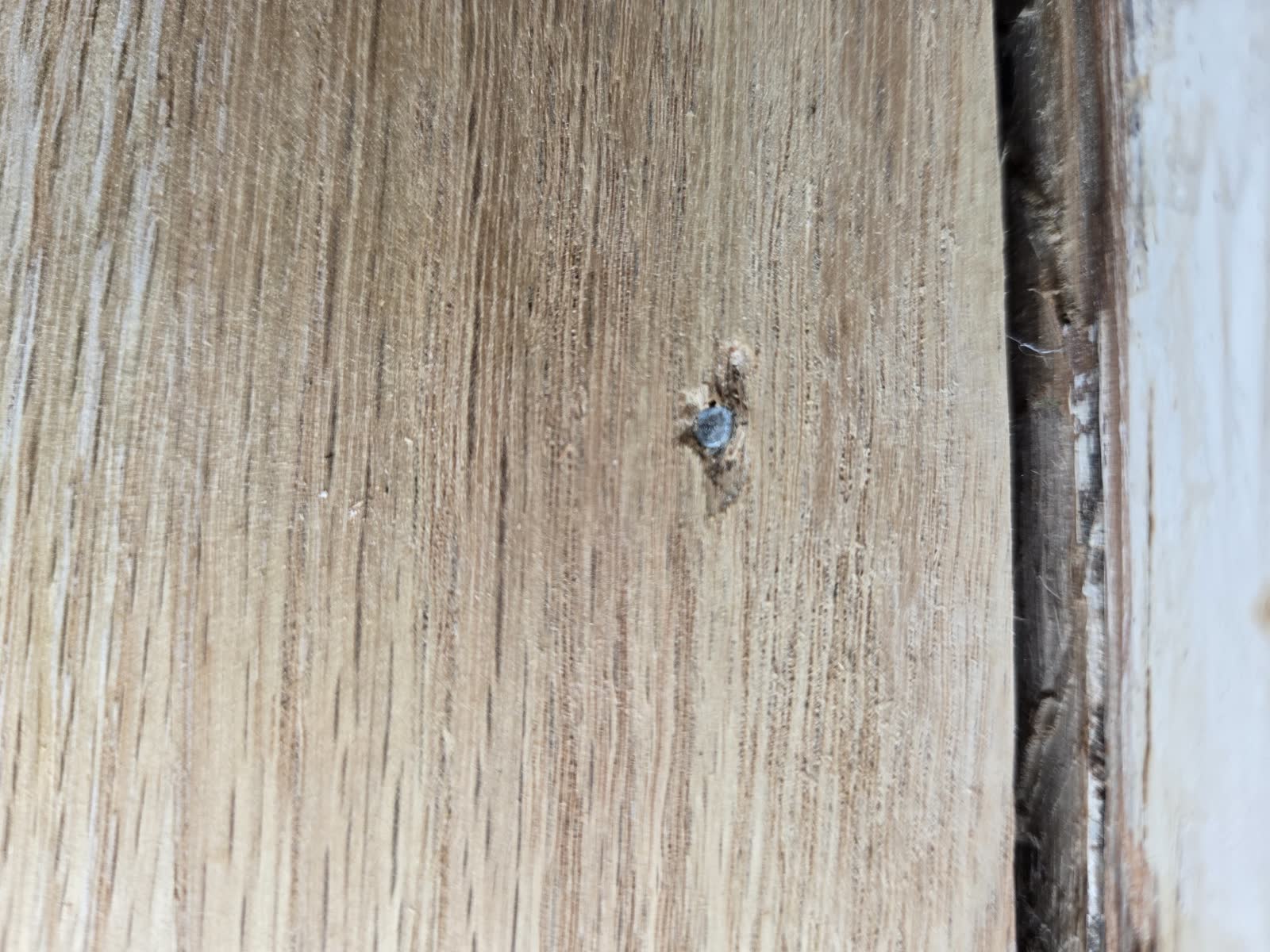
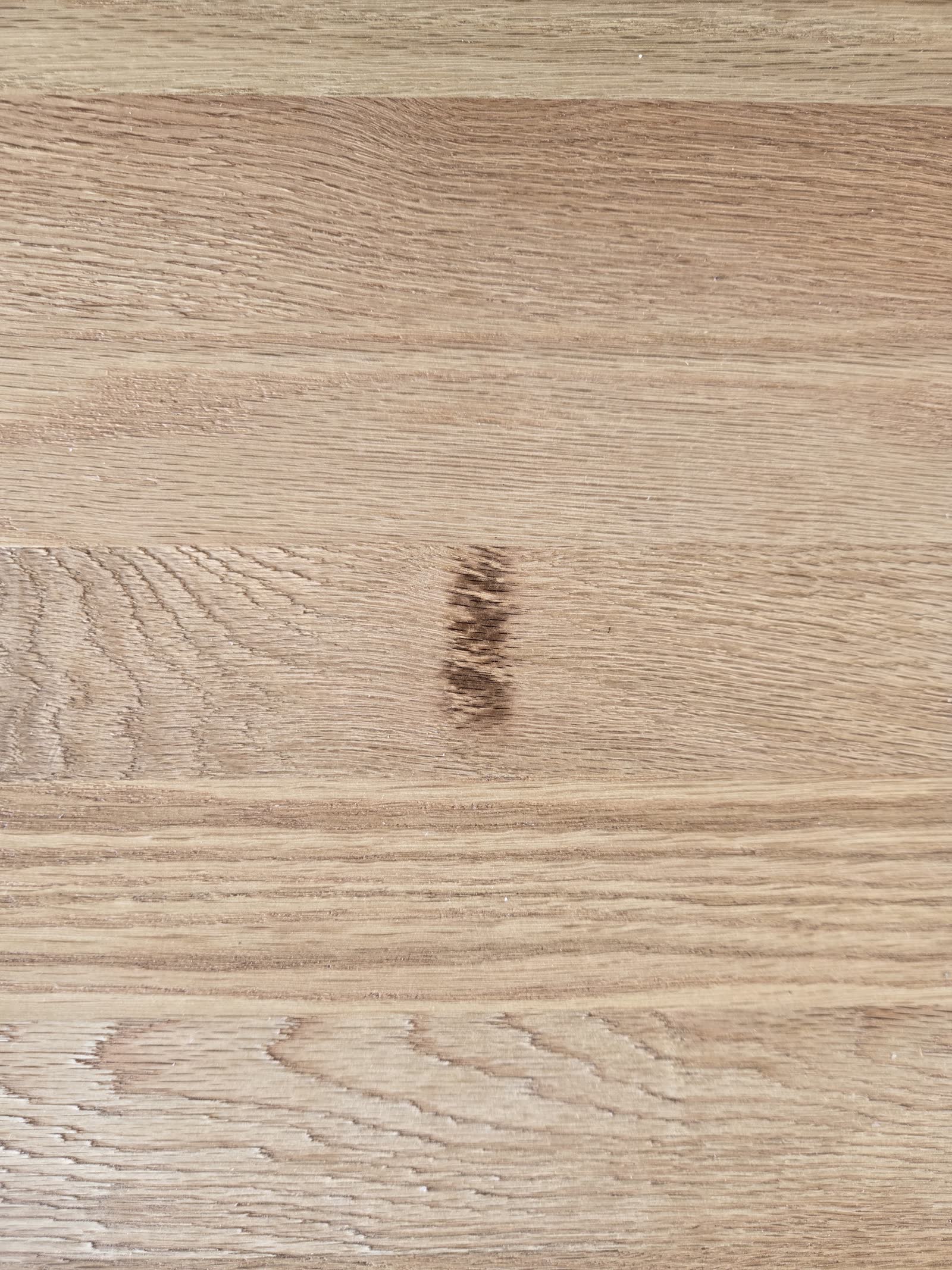
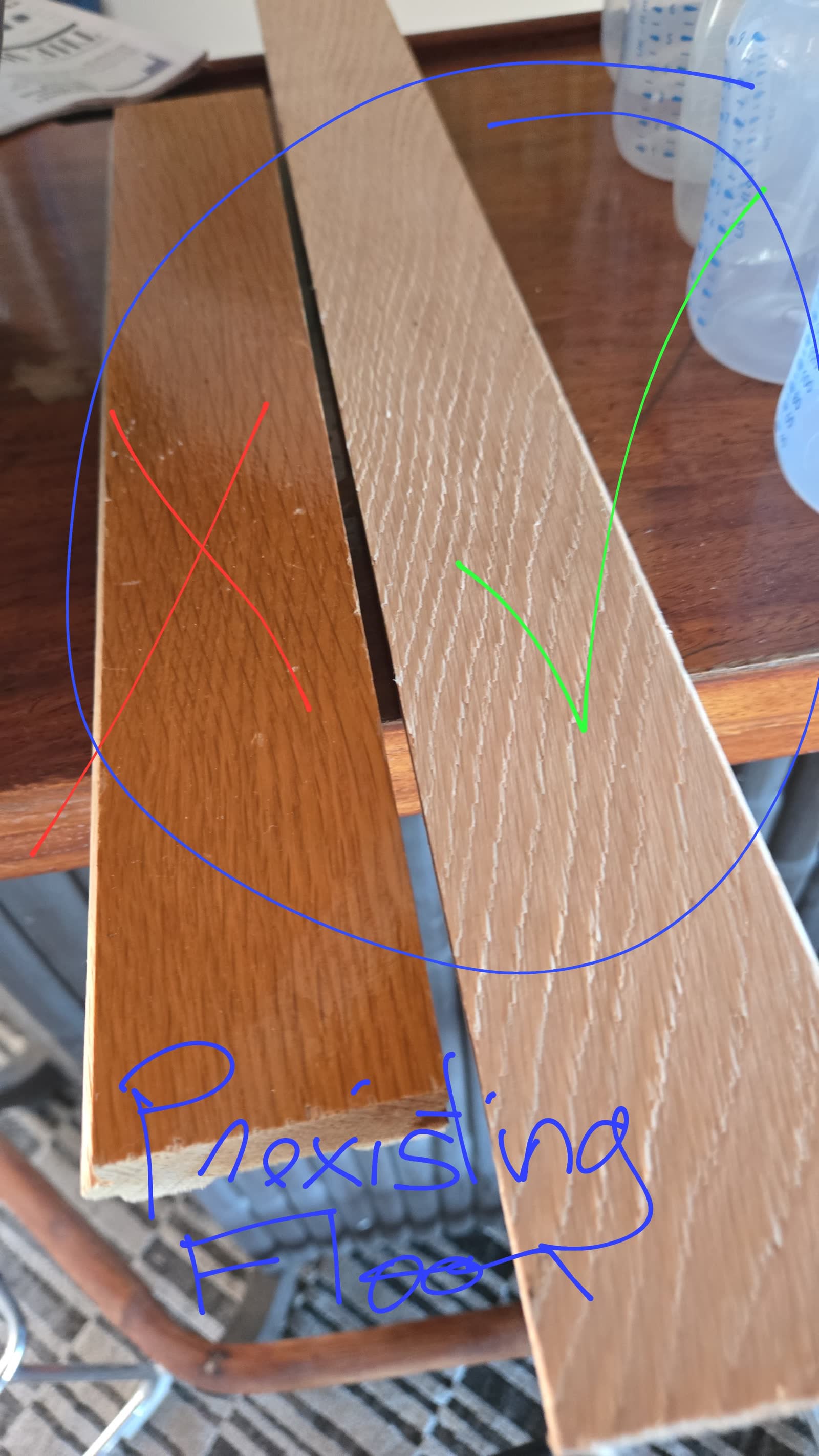
Photographs taken in the house on September 21 and 22, 2026. The August 19 and September 2 photographs are in the case file and available through Konani.
What a Licensed Contractor Says It Takes
On September 3, 2026, Flooring Specialist Inc. (Hawaii contractor license CT-33719) issued Estimate 5543 for the house. Job name: “replace oak.”
| Remove red oak flooring, install blocking, install white oak flooring | 610 sq ft |
| Unfinished 2 1/4 inch white oak | 658 sq ft |
| Sand, seal and finish; adjust expansion gaps; let wood acclimate | 610 sq ft |
| Custom threshold and reducer; white oak quarter round | |
| Total, including tax | $24,802.61 |
The estimate says, in the contractor's own words, that the existing floor is red oak, that it must come out, and that the gaps and acclimation must be corrected. The full estimate is on file and available to Terminix on request.
What Terminix Has Done Since
Miss Lee signs the Terminix Drywood Termite Defend plan and pays Terminix about $10,000 to fumigate the house.
Terminix accepts the termite damage as covered and writes the scope of work: "R&R Oak flooring, clear grade, no finish." Just oak.
The contractor Terminix chose starts work.
The family warns the contractor in writing about humidity and acclimation. He replies that he is aware and will sand and finish once the flooring is down.
Work ends with a second coat of finish drying, a hole still in the bedroom floor, and debris under the house. First photographs. The family asks Terminix in writing for the signed repair contract.
Shown the flooring cut short at a jamb, the contractor replies that the 5/8 inch gap is covered by 3/4 inch quarter round. The family tells him to stop and asks Terminix to take it from here.
The Terminix claims representative says the branch manager will call to arrange an inspection. The call never comes.
A licensed Hawaii flooring contractor inspects the floor and estimates $24,802.61 to remove the red oak and do it right. The family sends it to Terminix.
Two Terminix employees look at the floor for the first time. Terminix offers $15,000.
Side-by-side photograph of the original white oak and the installed red oak. Full walkthrough, 38 photographs.
Samples of both floors go to the USDA Forest Products Laboratory for an independent species determination. The signed repair contract has still not been provided.
What Hawaii Law Says
Hawaii Revised Statutes section 480-2 makes unfair or deceptive acts or practices in trade unlawful. Paying a contractor without inspecting the work, presenting a cheaper species as a repair to a 77-year-old customer, withholding the scope of work until a power of attorney was produced, and never providing the signed repair contract is the kind of conduct that section reaches. This site describes the conduct and cites the statute. It calls it nothing else.
Section 480-13 gives an injured consumer three times actual damages plus attorney fees and costs. When the consumer is an elder, 62 or older, the floor is $5,000. Miss Lee is 77. Section 480-13.5 adds a civil penalty of up to $10,000 per violation when the victim is an elder. On a $24,802.61 repair, that arithmetic is the reason doing the job is the cheap option. Complaints about licensed contractors go to the Regulated Industries Complaints Office under Chapter 444, and about pest control operators to the Pest Control Board under Chapter 460J.
Terminix Honolulu is corporate-owned. Terminix bought the local company in 2015 and was itself acquired by Rentokil Initial in 2022. Nationally, Terminix has 2,920 Better Business Bureau complaints closed in the last three years and has lost termite repair arbitrations and verdicts of $362,500 and $25.8 million.